
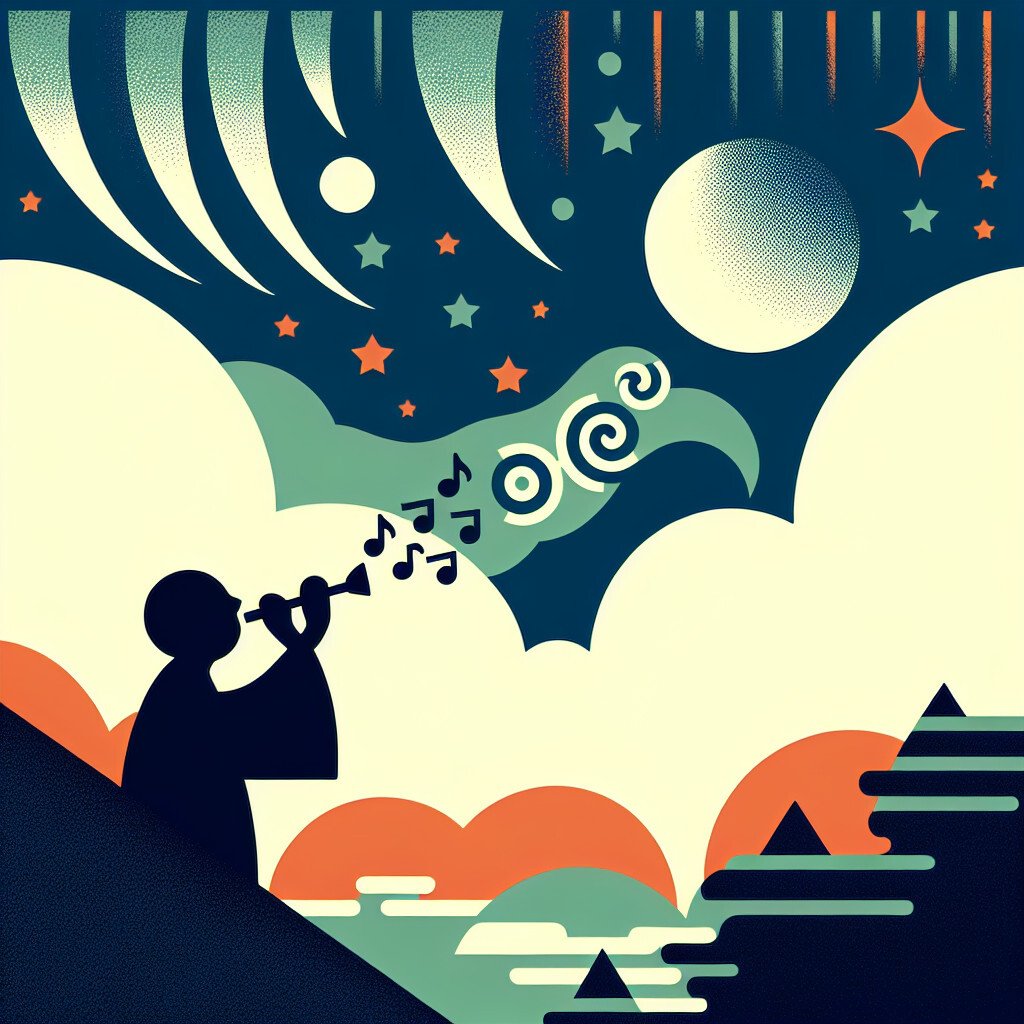
Walk through the quiet residential streets of Kyoto or Tokyo after dark, and you will quickly notice a profound cultural silence. Whistle a cheerful melody into the cool midnight air, and any older Japanese companion will freeze with visible alarm. Across generations, the famous whistling at night japan superstition—known natively as Yoru no Kuchibue (夜口笛)—has warned children and adults alike that piercing the nocturnal silence invites catastrophic supernatural misfortune.
According to popular folklore, whistling after sundown summons venomous serpents, malevolent demons, or wandering ghosts directly to your front gate. But why did an innocent musical habit inspire such intense dread across the Japanese archipelago?
Deconstructing the whistling at night japan superstition reveals that the taboo was never an arbitrary folk tale. Beneath its ghostly warnings lies a dark historical reality involving Edo-period criminal syndicates, venomous pit vipers, Shinto animism, and acoustic architectural limitations.
The Historical Origin of the Whistling at Night Japan Superstition
The most chilling practical explanation for the taboo traces back to feudal Japan during the Edo period (1603–1867). During this era, Japanese cities like Edo (modern-day Tokyo) were densely populated, labyrinthine urban centers completely devoid of streetlights after sundown.
Night belonged to the criminal underworld. Thieves (dorobo), burglars, and organized kidnappers—known as Zegen, human traffickers who abducted runaway children and vulnerable women—stalked the unlit alleys. Because visual identification was impossible in pitch-black corridors, criminal confederates utilized sharp, modulated whistles to coordinate synchronized burglaries and signal the approach of night watchmen.
If an innocent child or household member whistled casually after dark, the consequences were terrifying:
- Criminal gangs could mistake the whistle for a signal from an undercover scout, drawing dangerous syndicates straight to the residence.
- Night watchmen might misidentify the whistler as a prowling felon, resulting in immediate violent interrogation.
- Predatory kidnappers could use the localized sound to stalk, target, and abduct unguarded youngsters in the darkness.
To keep children silent and safe behind bolted wooden gates, parents transformed the terrifying reality of criminal whistles into a supernatural legend that children obeyed instinctively.
The Biological Threat: Summoning the Venomous Pit Viper
Beyond human predators, the most widespread folk saying warns: “Whistle at night, and snakes will come” (夜口笛を吹くと蛇が出る).
In traditional rural Japan, agrarian families lived in timber homes surrounded by rice paddies, overgrown bamboo groves, and stone drainage ditches. These moist habitats were the hunting grounds of the Mamushi (Gloydius blomhoffii), Japan’s native, highly venomous pit viper.
While snakes do not possess external ears, they are acutely sensitive to low-frequency ground vibrations and acoustic pressure waves transmitted through timber floorboards. Furthermore, the sharp, warbling timbre of human whistling closely mimics the distress frequencies of small rodents, birds, and tree frogs—the primary nocturnal prey of predatory vipers.
Whistling outside a farmstead after dark effectively acted as an acoustic hunting lure, drawing foraging pit vipers toward warm tatami mats and unprotected doorsteps. In an era before anti-venom serum, a venomous snakebite in rural Japan was frequently debilitating or fatal.
Shinto Animism: Whistling as a Spiritual Summoning Ritual
To understand the supernatural dimension of the whistling at night japan superstition, one must examine the ancient spiritual cosmology of Shinto.
In archaic Shinto ritualism, sound is considered a sacred creative force capable of piercing the veil between the physical world (Utsushiyo) and the invisible spiritual realm (Kakuriyo). Specialized whistling techniques—referred to historically as Usobuki or Kamigari—were practiced exclusively by trained Shinto priests and mountain ascetics (Yamabushi) to invoke forest spirits, divine wind gods (Fjin), and seasonal ancestors.
However, twilight marks Ouma-ga-doki (the hour of meeting demons)—the perilous threshold where malevolent spirits, restless ghosts (Yurei), and trickster yokai roam freely. In Japanese folklore, whistling produces a clean, high-pitched acoustic resonance that functions as an open metaphysical beacon. A layperson whistling carelessly into the night was believed to invite capricious entities, such as Tengu or shapeshifting foxes (Kitsune), to possess the home.
Architectural Acoustics: The Philosophy of Meiwaku
Japanese culture is world-renowned for its dedication to public consideration and the avoidance of Meiwaku (causing inconvenience or annoyance to others). Traditional Japanese domestic architecture reflects this social philosophy.
Historical Japanese homes were constructed using natural, breathable materials: paper sliding screens (shoji and fusuma), mud-plastered lattice walls, and raised cedar timber foundations. While acoustically sublime for peaceful meditation, these porous structures provided virtually zero acoustic sound insulation.
In a densely packed neighborhood where exhausted laborers and artisans retired early after arduous agricultural or manual labor, a sharp, piercing whistle echoed across dozens of adjoining bedchambers. Whistling after dark represented a profound breach of communal harmony and domestic respect.
Cross-Cultural Nighttime Taboos Across Asia
The cultural dread associated with nocturnal activities is a consistent theme across East and South Asia. Civilizations across the continent consistently utilized mythological taboos to regulate nighttime behavior when lighting and medical safety were limited.
In Korean folklore, playing the flute or whistling at night is similarly believed to summon venomous snakes or subterranean ghosts. These nighttime cautions parallel other regional domestic rules designed to prevent injury and contamination, such as the ancient Indian taboo against cutting nails at night in India and the Southeast Asian warning regarding sleeping with wet hair.
By comparing these interconnected beliefs, modern researchers can trace how ancient Asian societies independently constructed protective mythologies to enforce identical public safety standards.
Conclusion: The Pragmatic Poetry of Japanese Folklore
The whistling at night japan superstition is far more than an eerie campfire ghost story. It represents an ingenious fusion of historical crime prevention, biological caution, sacred Shinto acoustic reverence, and community manners.
Modern Japan is now illuminated by glowing neon skylines and protected by cutting-edge security systems. Yet when an elderly grandmother gently scolds a child for whistling under the moonlight, she is preserving an unbroken thread of communal wisdom—a delicate acoustic boundary honoring the historical shadows of feudal Japan.


